FOR THE FEELING YOU CAN'T EXPLAIN.
SOUND
LIKE YOU
FEEL.
Electronic music for the moments
that make you feel more alive.
LORD KAI / DEBUT SINGLE
Reality
Bending
Scheduled for
DRUM & BASSBEHIND THE SONG
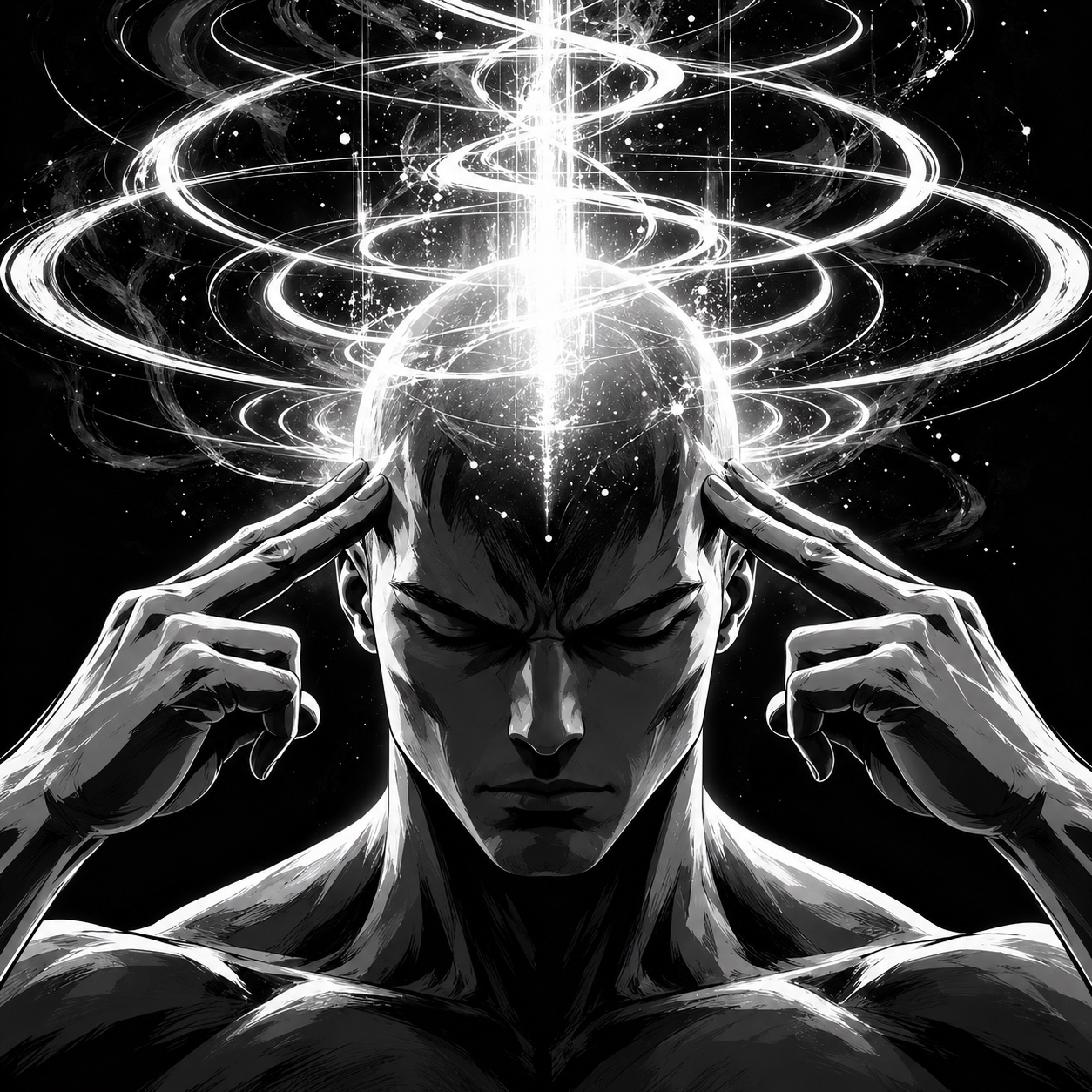
What happens when belief becomes something you act on?
Reality Bending explores a metaphysical idea: that inner state, intention, timing, and action can feed into one another, reshaping the reality we experience. It is a song about participating in that process with conviction and movement.
Built around heavy drum & bass, its intention is to make that sense of agency something you can feel—to inhabit a chosen state, commit to a direction, and move possibility toward form.
Releases & works in progress
THE INTENT BEHIND THE MUSIC
Music as a Designed State
I approach music partly as art and partly as an experiment in what music can do to a mind.
Read the full descriptionClose the description
Some of what I make is simply an exploration of sound: genres I love, unfamiliar musical traditions, unusual combinations, emotional landscapes, and ideas that I want to hear brought into existence. Other tracks have a more specific purpose. I think of these as state-shift tracks.
A state-shift track is designed around a question:
Can a piece of music make a chosen way of thinking, feeling, or relating to yourself easier to access?
Music already has an unusual ability to alter subjective state. A song can change arousal, redirect attention, trigger memory, produce chills, make a phrase repeat involuntarily in the mind, or become permanently associated with a period of someone’s life. My work explores what happens when those properties are treated deliberately as variables in the design of a musical experience.
The methodology behind these tracks is research-informed. I draw from work on music-evoked frisson, expectation and reward, involuntary musical imagery and earworms, emotional memory, self-referential cognition, repetition, mnemonic encoding, psychological reactance, and related areas of cognitive science and music psychology.
I then translate those findings into composition.
I make no claim that a song can secretly or automatically rewrite someone’s mind. The more interesting possibility is grounded in familiar cognitive mechanisms: emotionally salient, memorable and self-relevant material can become easier to encode, revisit, and associate with the self.
That creates the possibility of deliberately using music as a form of self-directed mental practice.
Instead of repeating an affirmation in silence, a listener can encounter an idea inside an emotional experience. A statement about agency, possibility, resilience, identity or direction can become attached to melody, rhythm, anticipation, release and memory. When the line returns later—in the song or in the listener’s own mind—it may also help reactivate elements of the emotional state in which it was learned.
The music therefore operates on two levels at once.
On the surface, it should simply work as music. It should have tension, movement, hooks, emotional payoff, beauty, impact, and enough depth to survive repeated listening.
Some tracks also contain a second design layer organized around a chosen cognitive or identity state. Their lyrics, musical arcs, and emotional architecture are constructed so the listener can spend several minutes experiencing that state from the inside.
That distinction matters to me.
I am interested in the difference between hearing an idea and temporarily experiencing the world through it. A lyric can describe agency from a distance, or the entire track can create an environment in which agency feels immediate and embodied.
What does certainty feel like?
What does agency feel like?
What does it feel like to experience yourself as capable, persistent, aligned, connected, expansive, or already in motion toward something?
And what happens if a song becomes a reliable retrieval cue for that state?
I think of this as a form of conscious self-conditioning: a person intentionally choosing which ideas, emotional states, and models of self they want to repeatedly encounter and strengthen.
That is why many of the lyrics are written from inside the state they are exploring. A track about agency attempts to occupy agency. A track about transformation tries to sound as though transformation is already underway. A track about possibility attempts to place the listener, temporarily, inside a world in which possibility feels perceptually closer.
This is also why the music frequently combines strong emotional dynamics with concise, repeatable language. The intention is for meaning, memory, and feeling to reinforce one another.
The state-shift methodology is one part of a broader creative practice.
Music is also a playground.
Some projects are driven primarily by curiosity: combining melodic drum and bass with sounds from different musical cultures, exploring ambient future garage, building cinematic electronic worlds, experimenting with rhythm or production, or simply pursuing an idea because I want to know what it sounds like.
The larger project has room for both.
One line of exploration asks, What can I make?
Another asks, What can music change?
Increasingly, I am interested in the territory where those questions overlap.
Finding a Way Into Music
Music has been part of my life for a long time, even though making finished music was largely inaccessible to me for much of it.
I sang when I was younger and spent years playing an instrument through roughly the end of high school. Later, I took an audio engineering course and had the opportunity to work directly with the traditional process of building electronic music.
What I discovered was that there was a persistent gap between what I could imagine and what I could actually express.
I could hear directions, textures, emotional arcs, and combinations in my head, but translating those ideas through conventional production workflows was much harder. The technical interface itself often became a barrier between the creative idea and the finished result. I could understand what I wanted something to feel like long before I had the technical fluency required to construct it from the ground up.
For years, that gap kept music mostly on the other side of something I wanted to do.
Generative tools changed that relationship.
They gave me a way to work closer to the level where my creative thinking naturally happens: through concepts, systems, emotional trajectories, language, references, structure, contrast, and iteration. Instead of spending most of the creative process fighting the interface between an idea and its execution, I can spend much more of it deciding what the music should actually become.
That has opened a creative direction I had wanted access to for much of my life.
It also matters practically. Independent creative work happens inside real limits of time, money, equipment, training, and access. Generative tools dramatically reduce some of those barriers. For me, that reduction has made the difference between having musical ideas and being able to meaningfully explore them.
AI as an Instrument
Generative AI is one instrument within this process. The larger methodology encompasses research, concept development, writing, psychological and emotional design, musical direction, experimentation, iteration, and curation.
I use generative music systems to explore a large space of possible realizations for a specific idea. A track may begin with an intended emotional or psychological function, research, lyric design, musical references, structural direction, vocal characteristics, and a defined experiential arc. From there, I iterate through possible interpretations, evaluate what actually happened, discard what failed, refine the instructions, and continue until a version achieves what I was trying to create.
Over time, this process has become increasingly systematic. Rather than simply describing a genre or mood and accepting the resulting output, I build tracks around musical behavior: how tension develops, where space opens, what changes at a peak, when a phrase returns, how an emotional state evolves, and how the different sections relate to one another.
The generative system supplies possibilities. My role is to determine the question being explored, construct the framework around it, decide which possibilities are worth pursuing, and determine when the finished piece actually expresses the intended idea.
That distinction is central to how I think about authorship in this medium.
AI dramatically expands the number of musical possibilities I can explore. More importantly for me, it closes a gap that had existed for years between musical imagination and musical execution.
I am interested in using that capability deliberately rather than treating generation itself as the creative endpoint.
The deeper project is an exploration of what becomes possible when generative tools are combined with artistic direction, cognitive research, experimentation, and a willingness to treat music as an environment capable of shaping experience.
The work presented here is an ongoing exploration of that idea.
THE SOUND UNIVERSE
Different tempos.
Same curiosity.
From the rush of a melodic drop
to the quiet after midnight.
Explore the projects and the ideas behind the sound.
THE WORLD DOESN'T END AT THE MUSIC.
More than
a frequency.
I'm Kai. Music is one way I explore consciousness, possibility, and what it means to be alive. The same curiosity shows up in the stories I write, the experiences I imagine, and the future I'm working to build.